
 Cart
Cart 
 Cart
Cart
Popular Packages
Tests By Profiles
Package Categories
Introduction
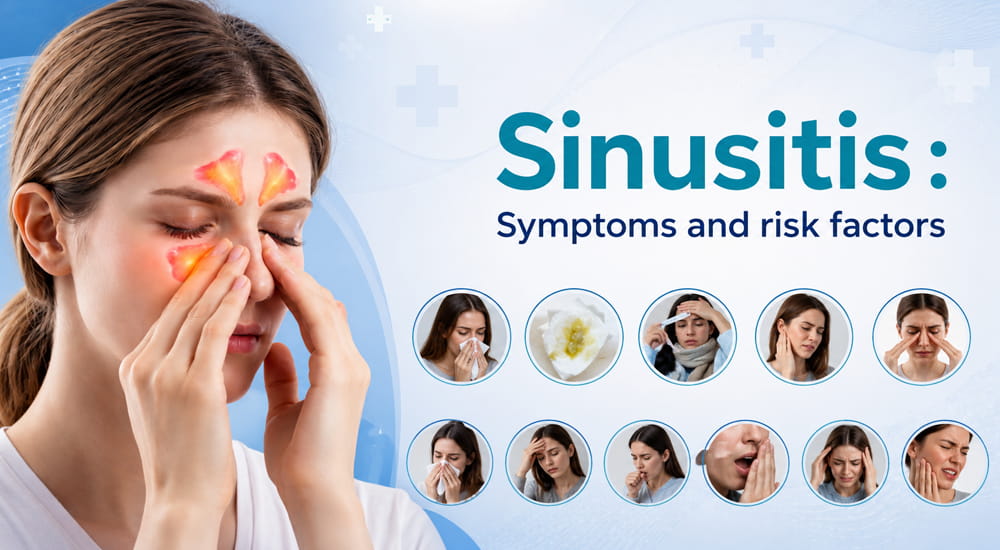
The air-filled structures underneath the face are called sinuses. Sinuses produce mucus, which works like a drainage system that keeps the nose clean by eliminating the bacterias and allergens. Sinusitis is a condition that causes inflammation of the tissues lining the sinuses. When viral and bacterial infections or allergies irritate them, they get blocked or filled with fluid, causing severe pain and pressure in the nasal congestion and face. A wide variety of factors contribute to this condition including common cold and allergies.
What are the common symptoms of sinusitis?
Some of the most common symptoms of sinusitis include
What are the risk factors for sinusitis?
Common risk factors for sinusitis include
The bottom line
Usually, fungi, viruses, bacterias and allergens cause sinusitis. Apart from that, the common cold and flu can also lead to this condition. One important thing to remember is that the condition is not contagious itself but the viruses or bacteria causing this condition may transmit from one person to another. Therefore, it is necessary to maintain safe distance from other people if you are suffering from this condition and make sure your face is covered when you sniff or cough.